



Interview with Vicky Abad
Music has always been an integral and valued part of Vicky Abad's life. As a child, the sounds of guitar gathered her family around the BBQ and fire, creating connections, lifelong memories and a deep belief in the power of music to strengthen bonds, soothe and heal. Those childhood experiences were the basis of an adult life steeped in music and song, and ultimately, a key pillar in the foundation and success of Sing&Grow.
Growing up in a large family, Vicky recalls the magical moments of sharing stories and songs and despite a lack of wealth, the rich connections she felt as the extended family gathered in the backyard together.
I grew up with a sense that music held families together, where your social status, economic position or your age didn't impact your relationships, everyone was equal in the music....it brought everyone together across the generations, across poverty and social situations...My father died really young and music was an important part of how we supported him through his sickness and how we supported each other.
A career in music therapy was a natural progression. After graduating from the University of Queensland (UQ), Vicky was employed in various capacities at UQ and as a music therapist, working in dementia care before transitioning to work with children at the Royal Children's Hospital in Brisbane. Despite the clinical, interventionist view of treating the patient only, Vicky recognised that her most impactful hospital therapy sessions involved both the child receiving the treatment and the parents.
I was interested in working in a more family-orientated way. That was quite a new idea in the early 2000s. Clinically, the focus was on treating the patient...the parent wouldn't necessarily attend or participate. The intervention model never felt right as I thought the parents are the experts of their own child, they are their child's first teacher and there needs to be more collaboration. This was at a time when family music therapy was not well established yet. I felt there was so much more I could do working with families through music.
The opportunity came when she applied to take up the role of Sing&Grow Director in 2001, taking the brainchild concept of academic colleague Jane Edwards and creating a functional and - popular - program.
There wasn't a step-by-step plan, it was quite open to interpretation. In retrospect that is what made Sing&Grow so successful. Jane had the idea and I had the clinical capabilities and curiosity to run with such an idea. This original idea was to take music groups to playgroups and Sing&Grow would be part of the playgroup movement. It became clear to both Mark [Brooke] and I that we had an opportunity to engage more at risk families who don't access playgroups. It was quite a mountain to climb - people who don't access services have a range of reasons why, so there was a lot of excitement but also resistance.
Identifying Gympie, Logan, Ipswich, and North Brisbane as communities in need, Vicky set about forging connections with the assistance of playgroup Project Officer, Lesley Olsen. Delivering upwards of 20 services for community workers in each area over six months, they determinedly presented a very different model of parenting support, one of soft entry through the sharing of music.
It took time to educate people that there is a lot we can do with music outside of the textbook definition of what music therapy is.... one of the most powerful things is the ability of music to knock down barriers for people... A lot of people are reluctant to engage with services they think will judge their parenting ability. They don't want to go to a talk on how to be a good parent, they need support, not lectures. Music speaks where words fail.
Running Sing&Grow sessions in community venues, and later in conjunction with community organisations, word soon spread of the success and value of the program.
My very first group was for young mums at Nundah Community Centre, we targeted support groups we thought would benefit most - young mothers, families with addition challenges, newly resettled and arrived families and families in socio-economic areas where challenging circumstances may impact a parent's availability for connection... We only did a couple of programs and word spread throughout the community that this program is great, people loved coming... Kids are innately musical and will respond to music if they have the opportunity and, while parents don't always know it, they are biologically hardwired to sing and make music with their children. We were able to bring that science and neurology into a group setting that was warm, open and safe...Sing&Grow was a real trailblazer. It didn't come from a deficit model....we went in and found what people can do - they can make music with their kids and build strengths and connections.
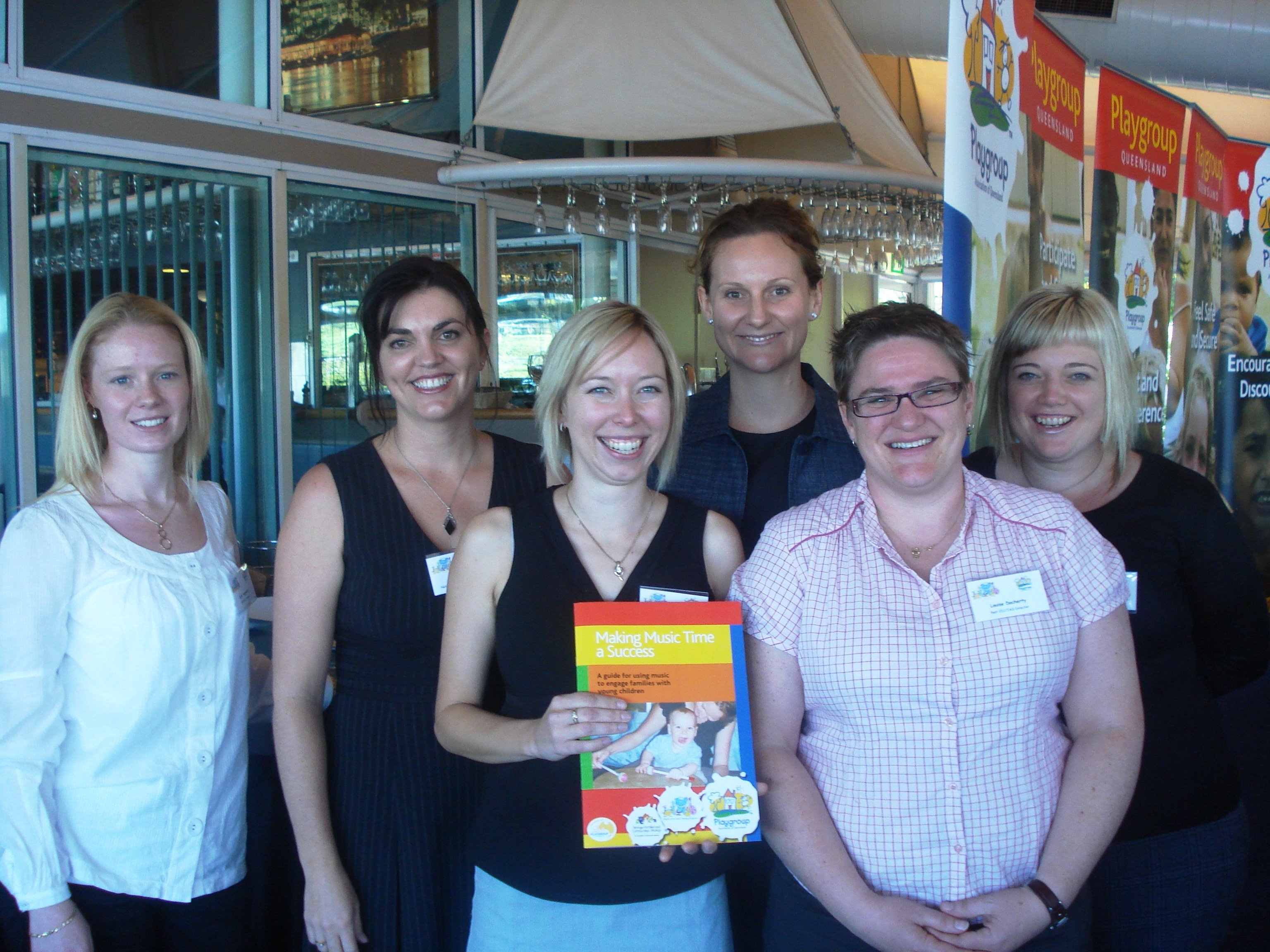
The program was a great success, achieving engagement and demand. The Minister for Chidlren and Youth Afairs, the Hon. Larry Anthony, requested an analysis of the program, granting a 12 month extension of the initial two years of funding, during which tie the gathering of data began. In 2024, while Vicky was on secondment teaching at the University of Limerick, the three-year Invest to Grow application was granted. When Vicky returned, it was time to take the program nation-wide and embark with Kate Williams on the journey of creating the program's evidence-base for future growth.
The research project was a game changer, we had the hard data, facts, which gave the government confidence to reinvest becuase it clearly makes a difference.
Today, Vicky runs her own business providing opportunities for people from all walks of life to experience music through groups, therapy, and lessors, while also continuing her research in music therapy. The success and evolution of Sing&Grow is a great source of pride and validation of Vicky's belief in the power of music.
Article taken from Celebrating 50 Years of Play Matters, History Book, first published in 2023.
Advertisement:

Discover the Play Hub!
Access over 100 activities, play resources,
videos and content.