


Teaching children about our world and how to care for it helps them grow into caring, responsible and proactive adults. But it also empowers them to start taking small steps to nurture our planet at a young age.
By giving children age-appropriate information about our world and the obstacles we face in caring for it, we are inviting them to join the conversation. Providing children with the chance to voice their opinion and practice brainstorming skills in the early years of childhood contributes to a more sustainable future.
This gives parents and educators a golden opportunity to guide children towards cultivating positive values and creative problem-solving skills.
This Sustainability Month, families can explore sustainable concepts together through low-cost, age-appropriate activities that encourage children to care for their environment, build creativity, and develop problem-solving skills.
Why is it important to embed sustainability themes in early childhood?
Children are naturally curious about the world around them. When we invite them to plant seeds, reuse materials, reduce waste, and care for living things, we are helping them develop environmental awareness alongside empathy, responsibility, and respect for nature.
Importantly, sustainability learning is woven into the everyday fabric of life around us, concepts like:
- Looking after plants and animals
- Reducing waste/what we do with waste
- Repairing and reusing items
- Sharing resources
- Appreciating nature and community
By connecting sustainability with play, children develop positive habits that can become lifelong ways of thinking and acting.
Ages 0-3: Discovering Nature Through the Senses
Babies and toddlers learn through touch, movement, and exploration. Sustainability experiences at this age focus on fostering a connection with the natural world.
What to Talk About
- "The plant needs water to grow."
- "Let's look after our garden together."
- "Can you feel how smooth this leaf is?"
- "The worms help our garden."
Play Ideas
- Water plants using a small watering can.
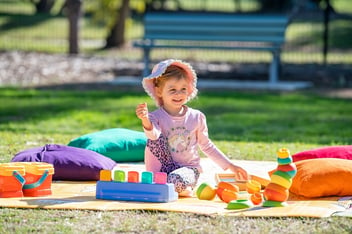
- Collect leaves, sticks, flowers, and stones for sensory play.
- Explore different textures in the garden.
- Watch insects, birds, and butterflies together.
- Create simple nature baskets using found natural items.
Low-Cost Sustainability Tip
Reuse household containers such as yoghurt tubs, ice cream containers, or takeaway containers as plant pots or sensory play trays.
Ages 3-5: Learning Through Imagination and Participation
Kindy and preschool-aged children love to create, imagine, and imitate what they see grown-ups doing. This is the perfect stage to introduce concepts such as growing food, reducing waste, and caring for shared spaces.
What to Talk About
- "Where do vegetables come from?"
- "What can we make from this instead of throwing it away?"
- "Who helps care for our community garden?"
- "What happens when seeds grow?"
Play Ideas
- Plant easy-growing seeds such as sunflowers, peas, beans, or nasturtiums (Fothergills has a great range of Little Gardeners seeds and starter kits, you can view them HERE. There are a great range of planters which make sustainable gifts too!).
- Create a fairy garden or nature hideaway.
- Build a cubby using reused materials.
- Make a cress egghead planter from an eggshell and cotton wool.
- Dry flowers and create nature-based artwork.
Low-Cost Sustainability Tip
Turn everyday household items into play resources:
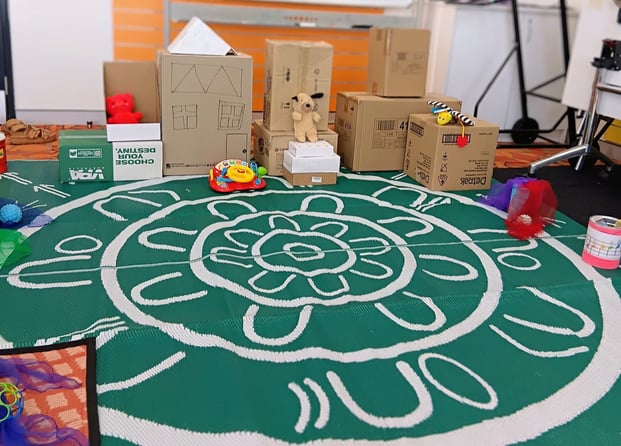
- Toilet paper rolls become binoculars or construction materials – the opportunities are endless, dinosaur necks, musical shakers mixed with rice etc
- Aluminium foil rolls can become marble runs.
- Rice, beans, or pasta can be used to make homemade shakers.
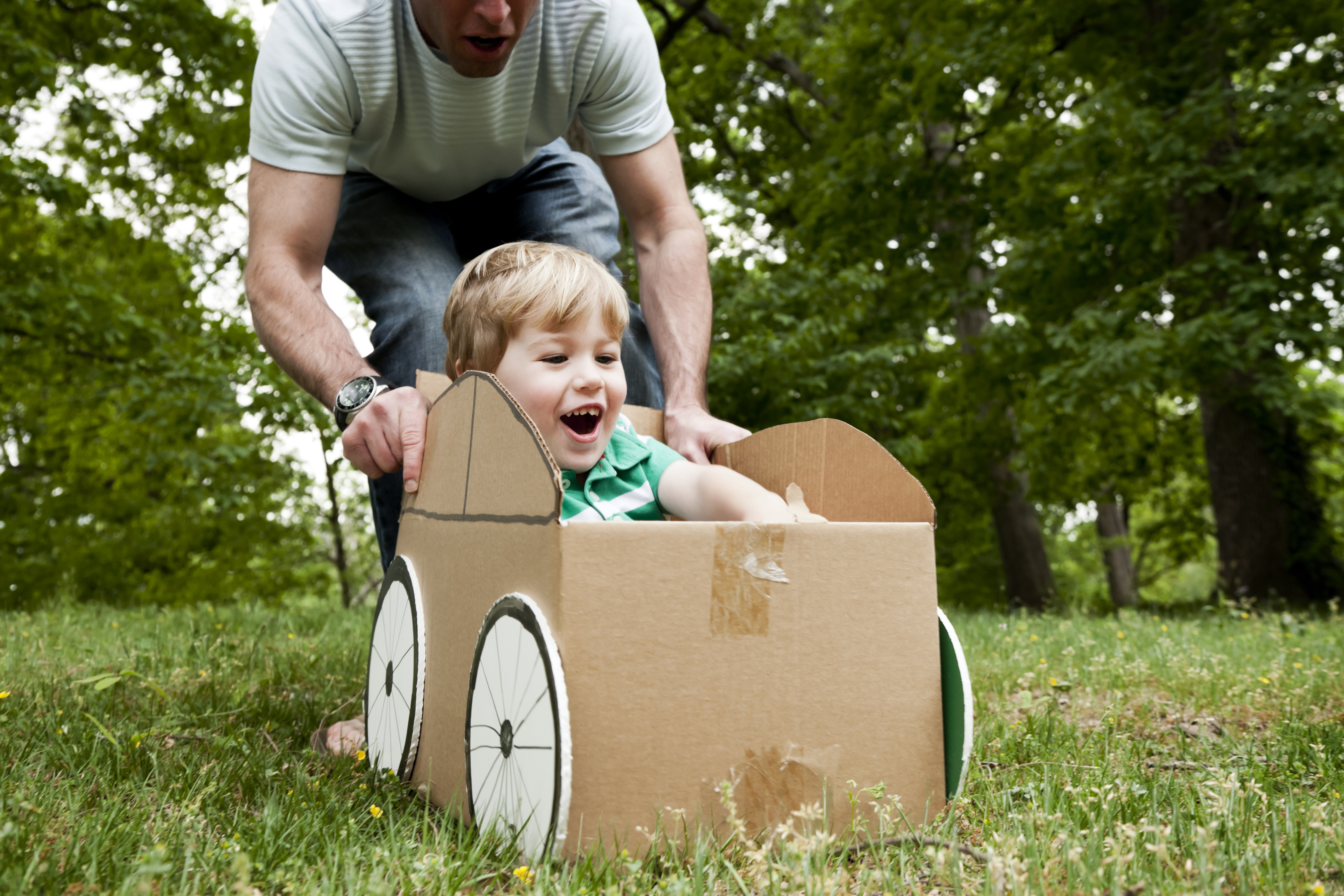
- Cardboard boxes can become vehicles, cubbies, or puppet theatres – or make a great resusable surface to paint and mark make.
These open ended materials create endless possibilities when combined with play!
Ages 5-8: Asking Questions and Solving Problems
School-aged children are keen investigators who enjoy understanding how things work.
What to Talk About
- Why is recycling important?
- What happens to rubbish after it leaves our home?
- Why do plants need pollinators?
- How can families reduce waste?
Play Ideas
- Start a small vegetable garden.
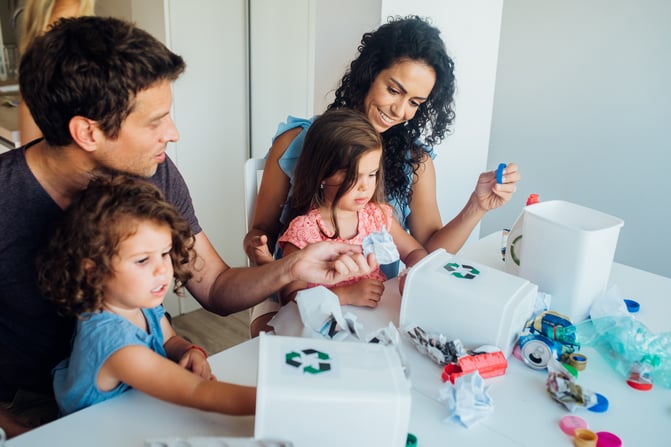
- Create a compost bin and observe changes over time.
- Build insect hotels using recycled materials.
- Conduct simple experiments comparing what materials decompose naturally.
- Keep a gardening journal with drawings and observations.
Low-Cost Sustainability Tip
Visit your local library or toy library to borrow resources instead of purchasing new ones.
Toy libraries provide access to quality toys, puzzles, and games while reducing household consumption and encouraging resource sharing within the community.
Learning Sustainability Through Community
Sustainability is not only about caring for the environment. It's also about building strong, connected communities.
Families can explore sustainability together through local resources such as:
Community Gardens
Community gardens offer opportunities for children to:
- Learn where food comes from
- Meet people from different backgrounds
- Develop gardening skills
- Experience shared responsibility
Toy Libraries
Toy libraries allow families to:
- Borrow instead of buy
- Access a wide range of developmental toys
- Reduce household waste
- Save money while keeping play fresh and engaging
Community Sharing
Simple community activities can have a meaningful impact:
- Share seedlings with neighbours
- Exchange books and puzzles
- Start a clothing trade/swap
- Join local clean-up events
These experiences help children understand that caring for people and places often happens together.
By embedding sustainability into everyday play experiences, families can nurture children's curiosity, creativity, and connection to the world around them. Most importantly, children learn that caring for the environment and caring for one another are both part of building a sustainable future.
If you are a Play Matters member, there are a range of sustainability-based activities on the portal. You may like to try (only accessible with login):
Ball Maze (using an old shoebox lid)
Birdfeeder (using pinecones or old waterbottles)
References
Department of Education. (2022). Belonging, being and becoming: The Early Years Learning Framework for Australia V2.0. Australian Government. https://www.education.gov.au/early-childhood/resources/belonging-being-becoming-early-years-learning-framework-australia-v20
Play Matters Australia. (n.d.). Bringing sustainability into play. https://playmatters.org.au/blog/bringing-sustainability-into-play
Mr Fothergill's. (n.d.). 10 reasons for kids to garden. https://www.mrfothergills.com.au/blogs/all/10-reasons-for-kids-to-garden
Fothergills. (n.d.). Growing from seed. https://www.mrfothergills.com.au/pages/growing-from-seed
United Nations Educational, Scientific and Cultural Organization. (2020). Education for sustainable development: A roadmap. UNESCO. https://unesdoc.unesco.org/
Toy Libraries Australia. (n.d.). About toy libraries. https://www.toylibraries.org.au
Community Gardens Australia. (n.d.). Benefits of community gardens. https://communitygarden.org.au/
Related content:


Advertisement:

Discover the Play Hub!
Access over 100 activities, play resources,
videos and content.