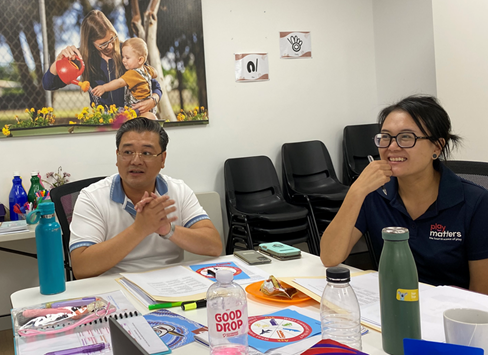


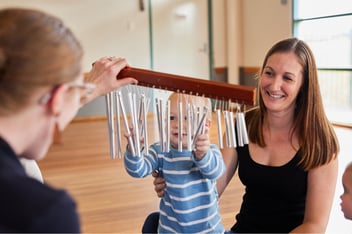

Play Matters Australia Early Childhood Coordination program supports families by coordinating early childhood pathways and strengthening collaboration across education, health and community sectors.
Play Matters Australia has seven Early Childhood Coordinators (ECCs) across Queensland, located in Buderim, Caloundra, Outback North (coordinated from Mount Isa), Tablelands East (coordinated from Mareeba), North Lakes, Redcliffe and Sandgate.
Key relationship building across health, education, disability, early learning and community sectors have been critical to the establishment and implementation of the Play Matters ECC program.
ECC Coordinators have worked to build trust, strengthen connections and create collaborative structures now actively supporting and making a difference for families, with a focus on advocating for culturally safe and responsive engagement, culturally and linguistically diverse families and families of children with disability or developmental delay.
“I no longer feel alone… I’m navigating systems I never could have on my own,” and “(the ECC Coordinators) understanding and compassion helped us move forward.”
Family assisted by ECC Program.
The ECC program in Outback North, coordinated from Mount Isa, collaborates with the Ngukuthati Childrens Centre increasing access to and participation in Early Years Services to strengthen kindy transitions. Working collaboratively has enhanced the ability to meet diverse needs, ensuring children and their families are prepared for the educational journey ahead.
Collaboration across Redcliffe, Kippa‑Ring, Rothwell and the broader Moreton Bay region has strengthened outcomes for families by creating clear, coordinated pathways into early learning, health and community supports. Through regular engagement with existing services and coordinated cluster meetings such as the Moreton Bay Cultural Cluster, the ECC has helped increase parents’ awareness of their child’s learning and development and supported parent-led initiation of further supports, health checks and transition pathways.
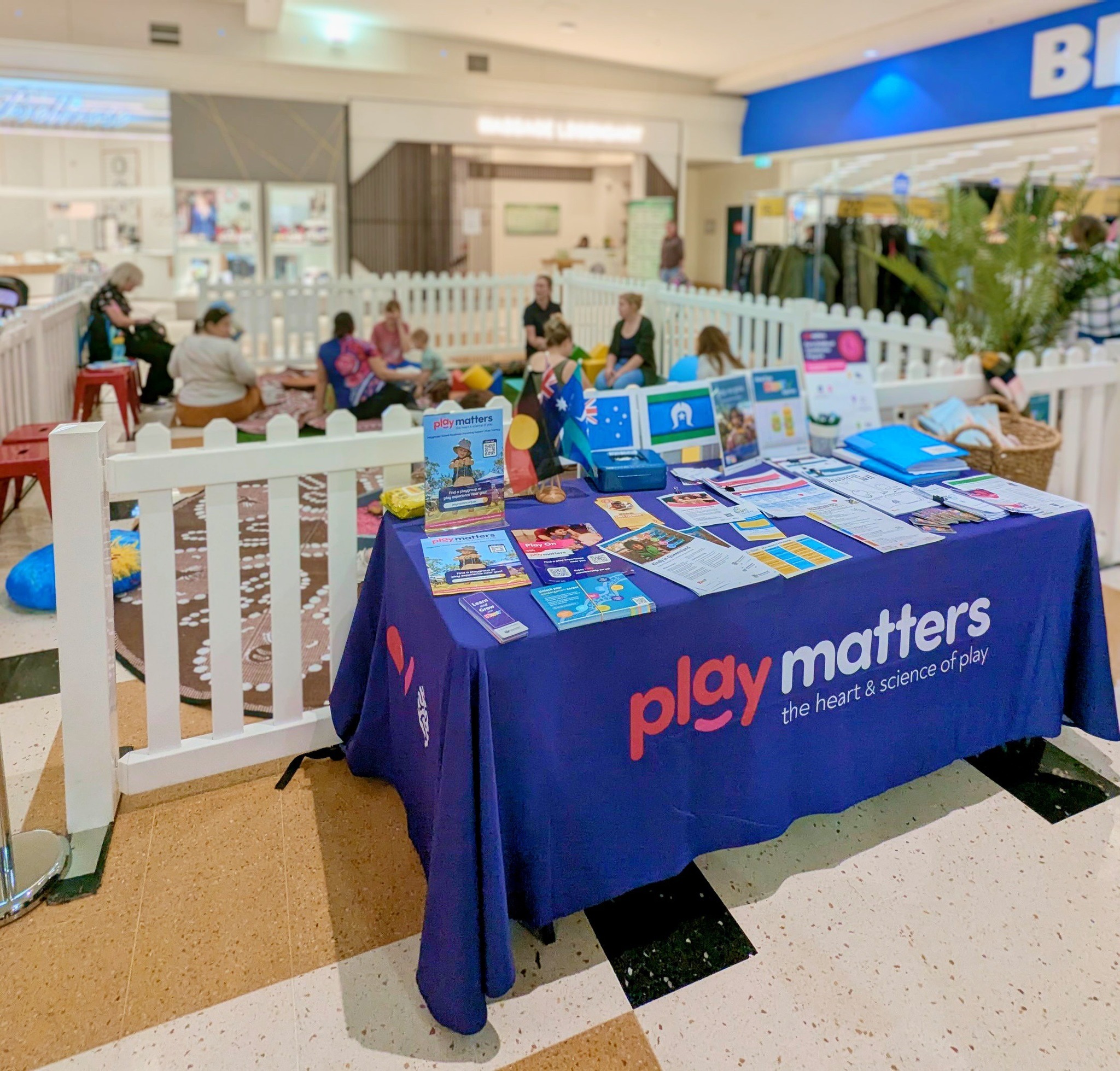
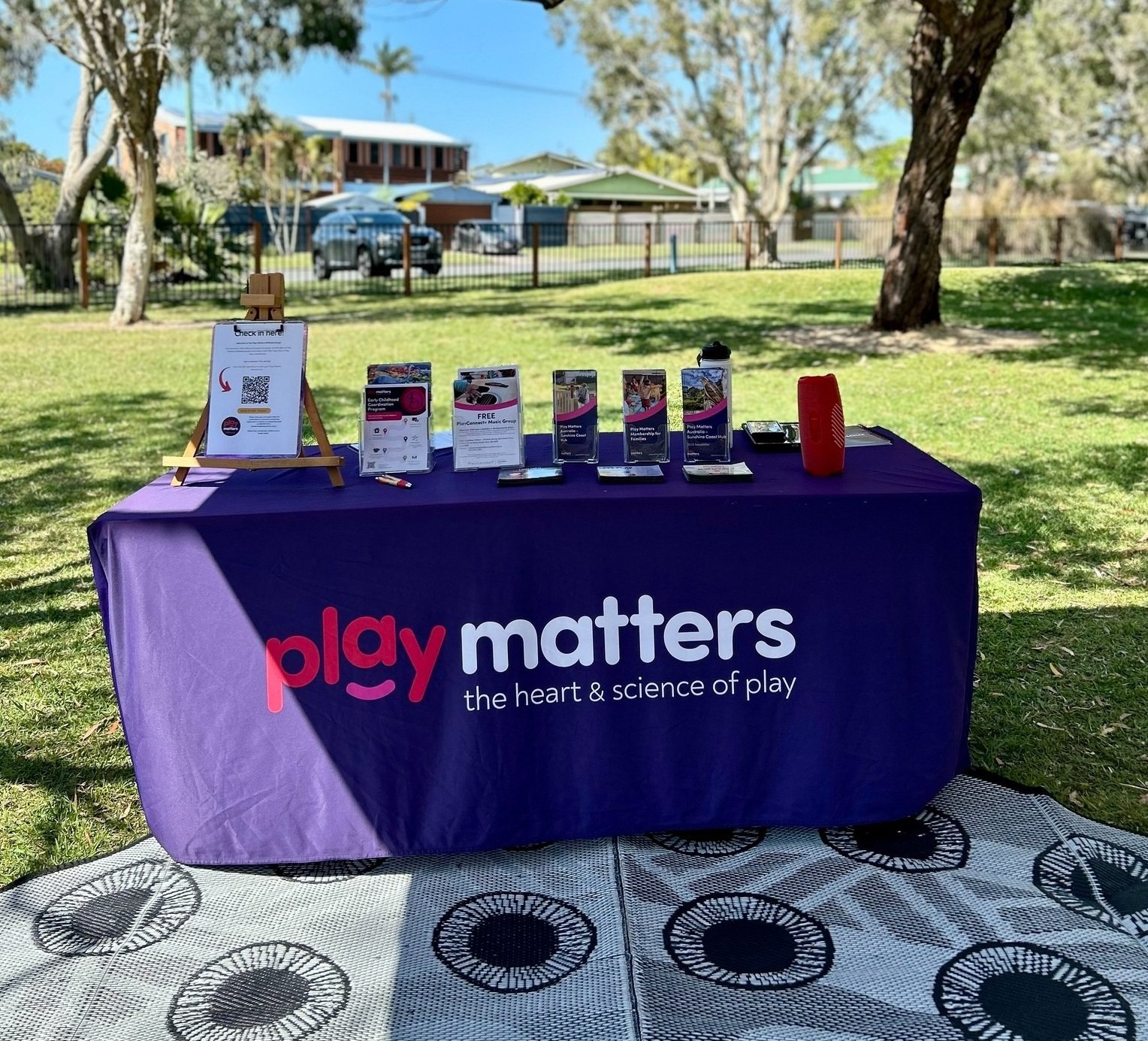
Through partnerships with local early years services, the ECC program has used pop‑up playgroups in high‑traffic community spaces as an effective, welcoming soft‑entry point for families. By bringing child health nurses, schools, KindyLinQ, allied health providers, libraries and community organisations together in one location, these sessions have removed common barriers to engagement, such as transport and uncertainty about where to begin, and created an easy, informal way for families to engage.
By creating a fun and engaging environment for children, the pop-up playgroups have encouraged incidental conversations between families and service representatives, helping families to discover support they may not have known existed or felt unsure about accessing.
Reflecting on engagement as part of the pop-up playgroups across the Moreton Bay and Brisbane delivery regions, ECC coordinator Nerissa said,
“One first time mother expressed that she was expected to know everything and she doesn't have time to read anything. She said she felt she did not know where to get support and was very grateful to be able to have a chat and figure a few things out in person while bub was happy playing.”
“One grandparent came up with a big smile and said she was looking for a Torres Strait Islander playgroup. I directed her to the Deception Bay groups; she said what we do here is great and she was ready to reach out to the Grandparents and Kindship playgroups for support.”
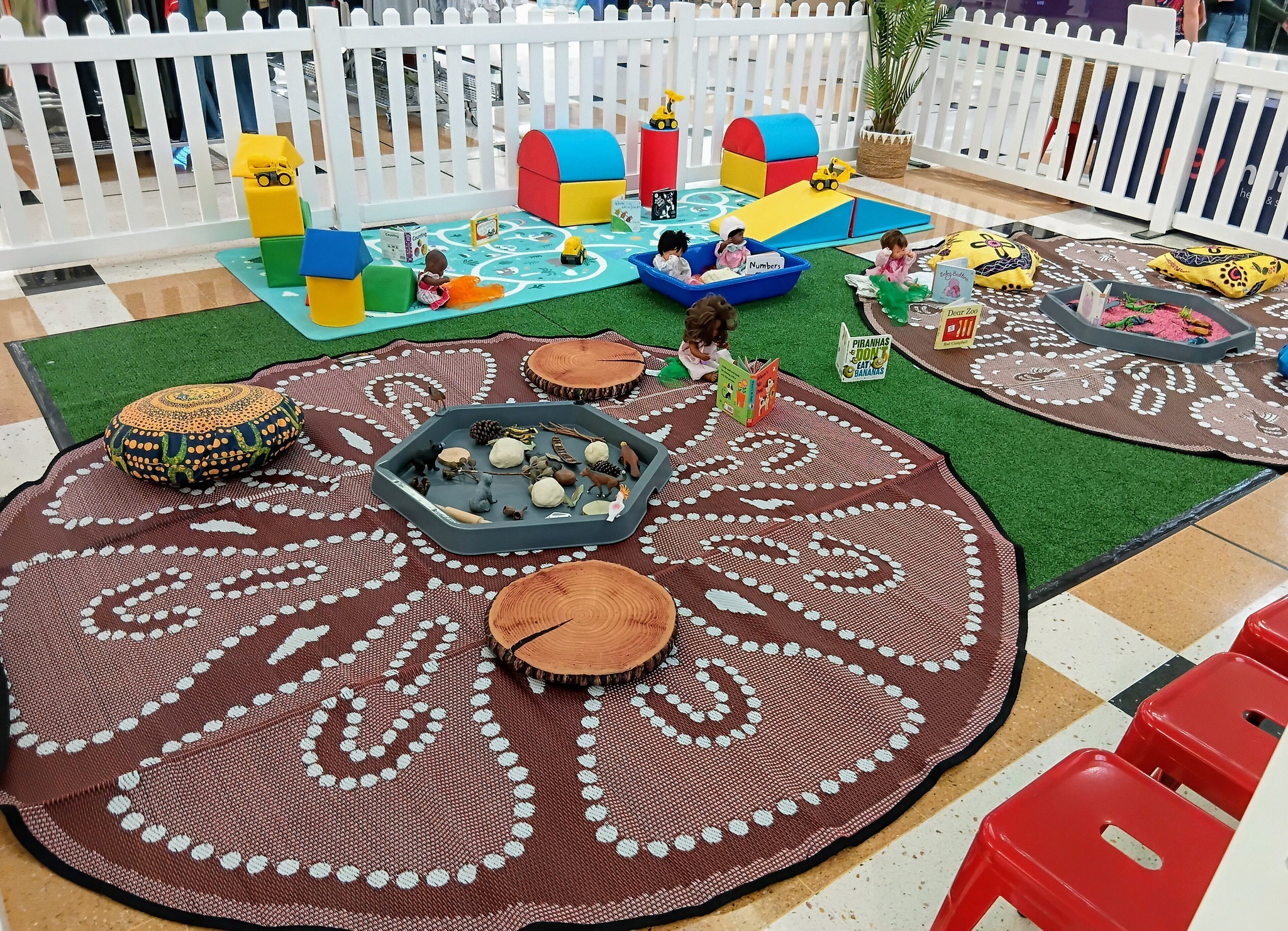
Co-location at a Community Centre in the Caloundra region has enabled families, particularly those with limited prior engagement in non-clinical settings. This approach has reduced barriers for families experiencing developmental delay or disability and for children with no previous engagement in early childhood education, ensuring they can be linked to allied health and educational services before key transition points.
“The Early Childhood Coordinator pilot has filled a gap, providing much‑needed support for families navigating childcare and early childhood development.”
Caloundra Community Centre
Buderim’s ECC activity has contributed to a 91 percent transition and enrolment rate into kindy or early learning. Families report increased confidence and understanding of early childhood development, supporting more consistent attendance and stronger engagement once children enter kindy.
The partnership work with local schools has reinforced these outcomes by ensuring families are informed, prepared and connected prior to school entry.
“Play Matters works closely with families who have children not yet enrolled in school or kindy, helping them to establish routines and confidence in attending regularly. Their warm, play-based approach creates a positive first experience of education for children and provides reassurance and guidance for parents and carers. This early engagement has led to improved attendance patterns and a stronger sense of belonging for children as they transition into school life.”
Deputy Principal in the Buderim and Caloundra region.
The Early Childhood Coordinator (ECC) program offers a family‑centred connection point that helps bridge the gap between the family, education and health systems.
By understanding each family’s strengths, culture and circumstances, ECCs translate complex systems into clear, practical steps, ensuring children access the right support at the right time. This relational and strengths-based approach increases communication across services, improves early identification, and helps families feel confident and connected as their child moves through the early years and into school.
“Through our engagement with the ECC program, BUSHkids has observed a strong focus on connecting families with local health, early childhood and community services. This work complements our mission to deliver early intervention and prevention services, and we support the continuation of initiatives that enhance community partnerships and improve access to early childhood supports.”
Carlton Meyn, Chief Executive Officer, BUSHKids Caloundra.
By understanding each family’s strengths, culture and circumstances, ECCs translate complex systems into clear, practical steps, ensuring children access the right support at the right time. This relational and strengths-based approach increases communication across services, improves early identification, and helps families feel confident and connected as their child moves through the early years and into school.
Play Matters ECC Program Service Summary:
- Earlier and more coordinated referrals improving children’s readiness for kindy and school.
- Over 100 coordinated referrals across ECC delivery sites, strengthening continuity between health, early learning and community services.
- 40–59% of children completing developmental or health checks.
- Increased engagement through culturally responsive supports, establishing connections and networks that strengthen cultural responsiveness and safety.
- Strengthened pathways for children with disability or developmental delay, providing educational pathways for previously disengaged families.
- Increased engagement of families traditionally underrepresented in early childhood settings, reducing the number entering kindy without prior support.
The Play Matters Early Childhood Coordination Program is funded by the Queensland Government through the Department of Education and Queensland Health.
Related content:

Advertisement:
.jpg)
Discover the Play Hub!
Access over 100 activities, play resources,
videos and content.