


Nature play or nature contact is any freely chosen, child‑led, unstructured play that involves contact with natural elements like trees, rocks, sand, water, leaves, insects, and weather. It can happen in the bush, a local park, the beach, or your own backyard or balcony. It’s less about the setting and more about time and permission to explore.
Why Nature Play Assists Children’s Wellbeing
Research shows contact with nature in the first five years supports children’s social and emotional wellbeing, offers rich sensory experiences, and creates space for movement, creativity, and problem‑solving. There is not a one-size-fits-all recommended guidelines surrounding nature play, but all types of nature contact can be beneficial, what matters is regular opportunities that fit each family and community.
Children around the world are spending more time indoors compared to previous generations (Dealey & Stone, 2017). Developments such as reduced access to natural spaces due to urbanisation, increased use of digital technologies and concerns about the safety of play in natural environments are among the reasons for children having fewer opportunities to experience nature regularly (Beery, 2020; Capaldi et al., 2015; Dankiw et al., 2020).
In the broadest sense, nature play in a child’s early years refers to any type of physical contact with the natural environment. There is strong evidence that many types of nature contacts, including nature play, are beneficial for children’s wellbeing in the early years. This research suggests that the early years are a critical time in which a child’s relationship with nature is developed and, subsequently, carried on as a preference later in life (Capaldi et al., 2014; O’Farrell et al).
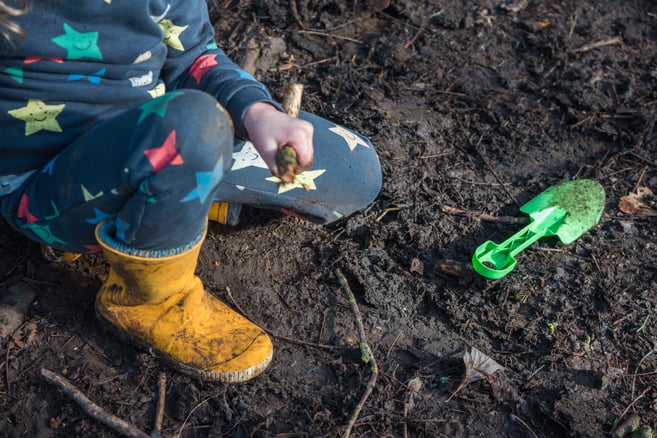
For both educators and parents nature play helps children exercise agency, expand their thinking, and build curiosity and can act as a wellbeing booster and learning accelerator, assisting with language, cognitive growth, physical coordinator, and social confidence in everyday, accessible ways.
Bring Nature Play into Everyday Routines
Building a habit of noticing and inviting children to lead is key in encouraging nature play exploration.
Start with what is available and accessible to you. A simple neighbourhood walk can become a mini‑safari when you invite children to notice what is around them. Ask questions like “What can we hear?” or “Which plants are changing?” and describe what you both see, hear, smell, and feel. This gentle noticing helps children tune into their environment and naturally builds language as they learn new words and concepts through real‑world experiences. If green spaces are limited, balconies, courtyards, and verge gardens still count and are spaces to explore.
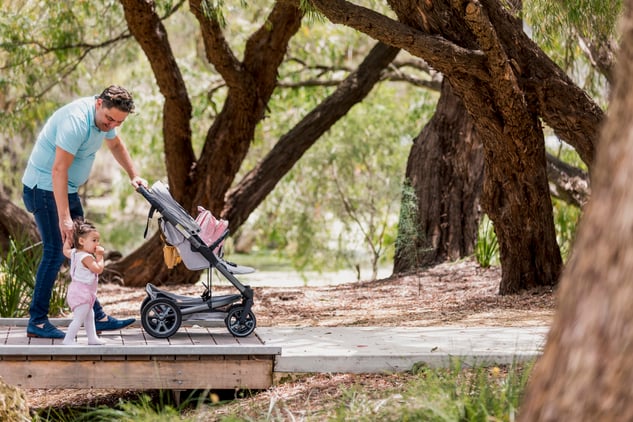
Nature play is most powerful when it’s unstructured and child‑led, whether children are digging in the dirt, using sticks as wands or swords, splashing in puddles, or pretending to cook in a mud kitchen. When children choose how to play, they build autonomy and confidence, and they gain safe opportunities for “risky play,” where they can test their abilities and learn to make decisions. Parents can help assess risk by offering clear boundaries (e.g., “sticks stay low,” “we check plants before touching”) as gradual, supported risk helps children practise judgement safely.
Think about loose parts as everyday play materials. Offering items like sticks, seedpods, stones, leaves, shells, and water gives children open‑ended materials that can become anything in their imagination. These natural objects are perfect for building, sorting, crafting, pretending, and storytelling, allowing children to create their own play worlds using what nature provides. Avoid small, brittle materials with babies and toddlers and ensure young children are always supervised and supported.
Blend everyday routines with nature to bring learning outdoors. Having a snack outside can spark conversations about colours, textures, and where and how foods grow. Reading under a shady tree becomes an interactive experience when you use “see–show–say” prompts to encourage back‑and‑forth conversation. These small moments mirror the evidence‑based language strategies used in playgroups and show how nature can enrich the learning that already happens throughout your day.
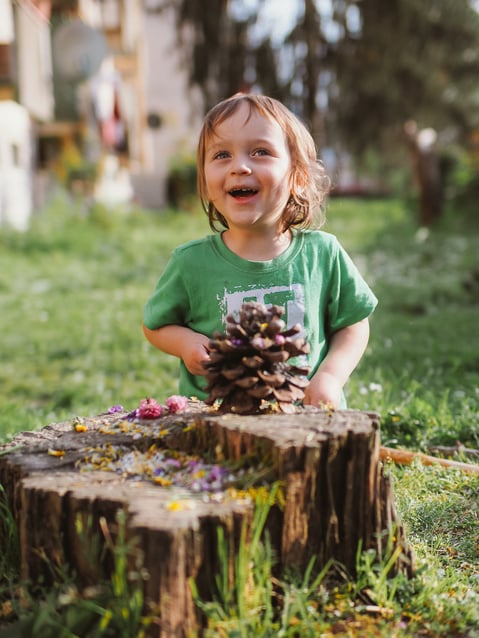
Creating Opportunities for Age-Appropriate Nature Play
While many local governments are investing in innovative nature-based play spaces, children do not need these facilities to engage in nature play. Time in the backyard or a walk around the neighborhood offers plenty of opportunities.
.png?width=1667&name=PLY_Activity%20Icons_Pink_1%20(1).png) |
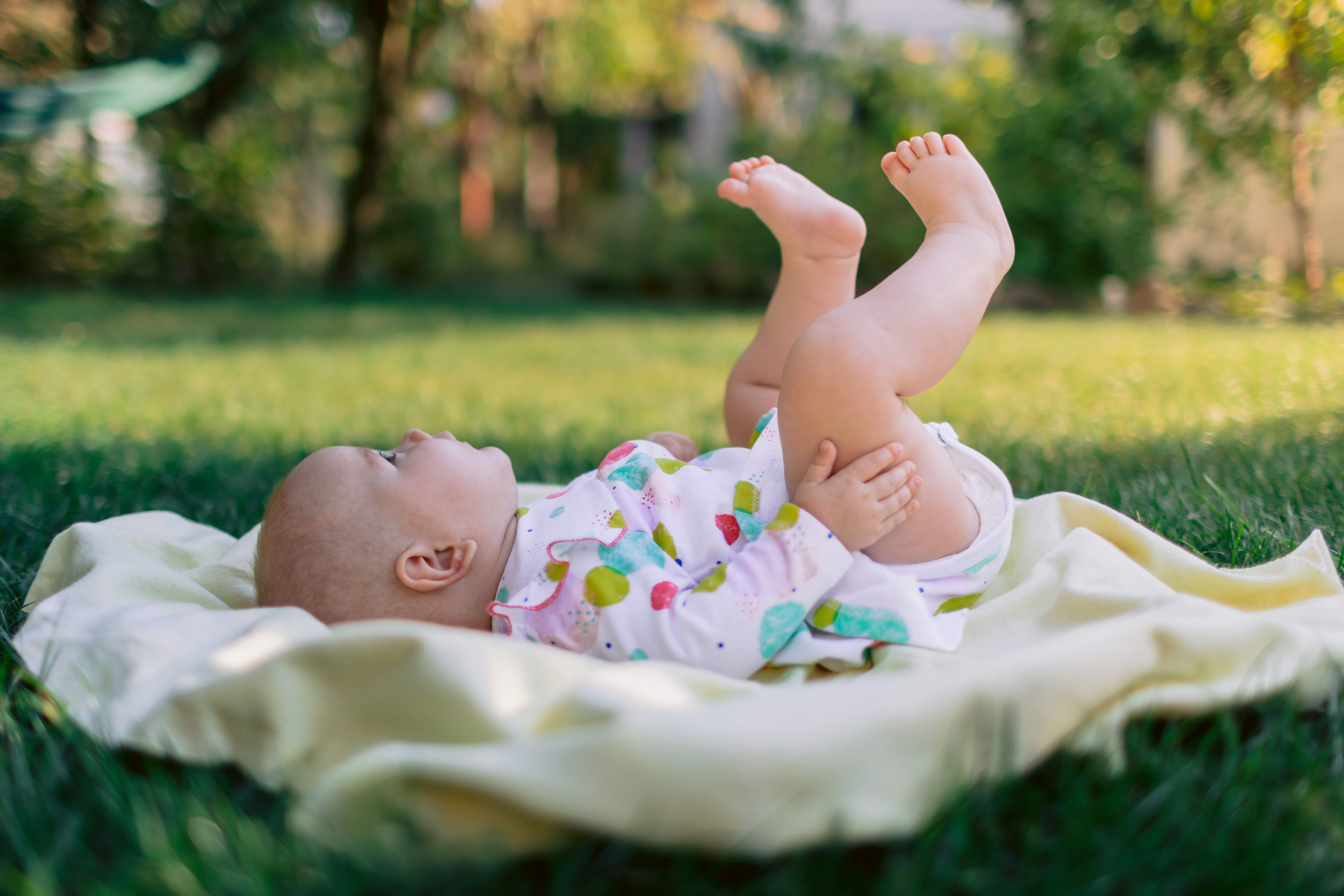
Ground-level sensory experiences such as crawling over grass, smelling flowers, splashing hands in shallow water, and scrunching fallen leaves with their hands. During a walk, point out what you can see, hear, and smell, allowing your baby to observe as well. E.g., “I can hear birds chirping and see tree branches swaying in the wind over there” |
.png?width=1667&name=PLY_Activity%20Icons_Pink_2%20(1).png) |
Movement sequences such as climbing over a log, hanging off a low tree branch, stepping from rock to rock. Solitary play such as filling a bucket with water, sorting pebbles, stacking twigs, and scooping sand. |
 |
Children have moved from solitary and parallel play to cooperative activities such as working together to build sandcastles or conducting an animal safari. By this stage, most children will take charge of their own play experiences, using their imagination and creativity to engage in dramatic play e.g., serving mud pies at their ‘restaurant’. Adults should follow their lead and join in the fun! |
What the Evidence Tells us About Regular Nature Play
- Wellbeing: Regular nature contact in early childhood supports social–emotional health and offers sensory experiences that nurture curiosity and joy.
- Learning and development: Reviews of nature‑based research and reports demonstrate positive links with self‑regulation, social skills, and aspects of cognitive development, while qualitative studies describe richer play, creativity, and peer interaction in natural settings.
- Practical implementation: Australian practice guides recommend child‑led, unstructured experiences, access to loose natural materials, and parent coaching to overcome common barriers (like safety concerns and limited green space).
Some Handy Nature Play Resources
- Raising Children Network Outdoor Play
- Raising Children Network Nature doll: Disability and Autisum activity
- Nature Play Queensland Resources
- Nature Play Monthly Play Kit Play Matters Australia (this requires a Play Matters membership account to login and access)
- Transient Nature Art (this requires a Play Matters membership account to login and access)
- Nature Mobile (this requires a Play Matters membership account to login and access)
- Nature Colour Wheel (this requires a Play Matters membership account to login and access)
References:
- Australian Institute of Family Studies. (2024). Nature play and child wellbeing. https://aifs.gov.au/resources/policy-and-practice-papers/nature-play-and-child-wellbeing
- Johnstone, A., Martin, A., Cordovil, R., Fjørtoft, I., Iivonen, S., Jidovtseff, B., Lopes, F., Reilly, J. J., Thomson, H., Wells, V., & McCrorie, P. (2022). Nature-based early childhood education and children’s social, emotional and cognitive development: A mixed-methods systematic review. International Journal of Environmental Research and Public Health, 19(10), 5967. https://www.mdpi.com/1660-4601/19/10/5967
- Hutchinson, C. (2026). Connecting children to nature and participating in nature play. Early Childhood Australia Learning Hub. https://learn.childhood.org.au/connecting-children-to-nature-and-participating-in-nature-play/
- Raising Children Network. (2024). Nature doll: Disability & autism activity. https://raisingchildren.net.au/autism/school-play-work/activity-guides/nature-doll-activity-children-disability-autism
- Nature Play Australia. (n.d.). Resources. https://www.natureplay.org.au/resources
Related content:
Advertisement:
.jpg)
Discover the Play Hub!
Access over 100 activities, play resources,
videos and content.