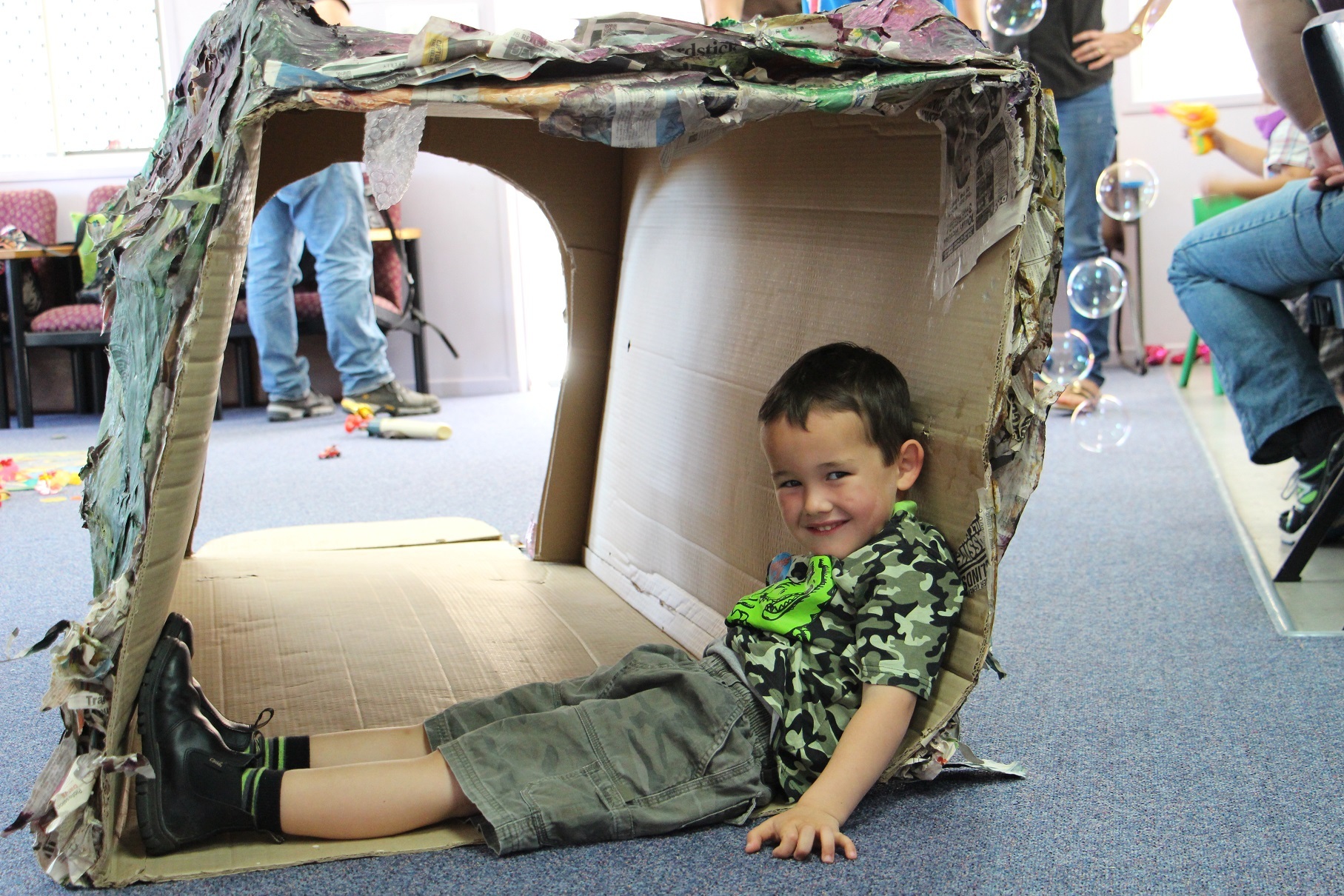



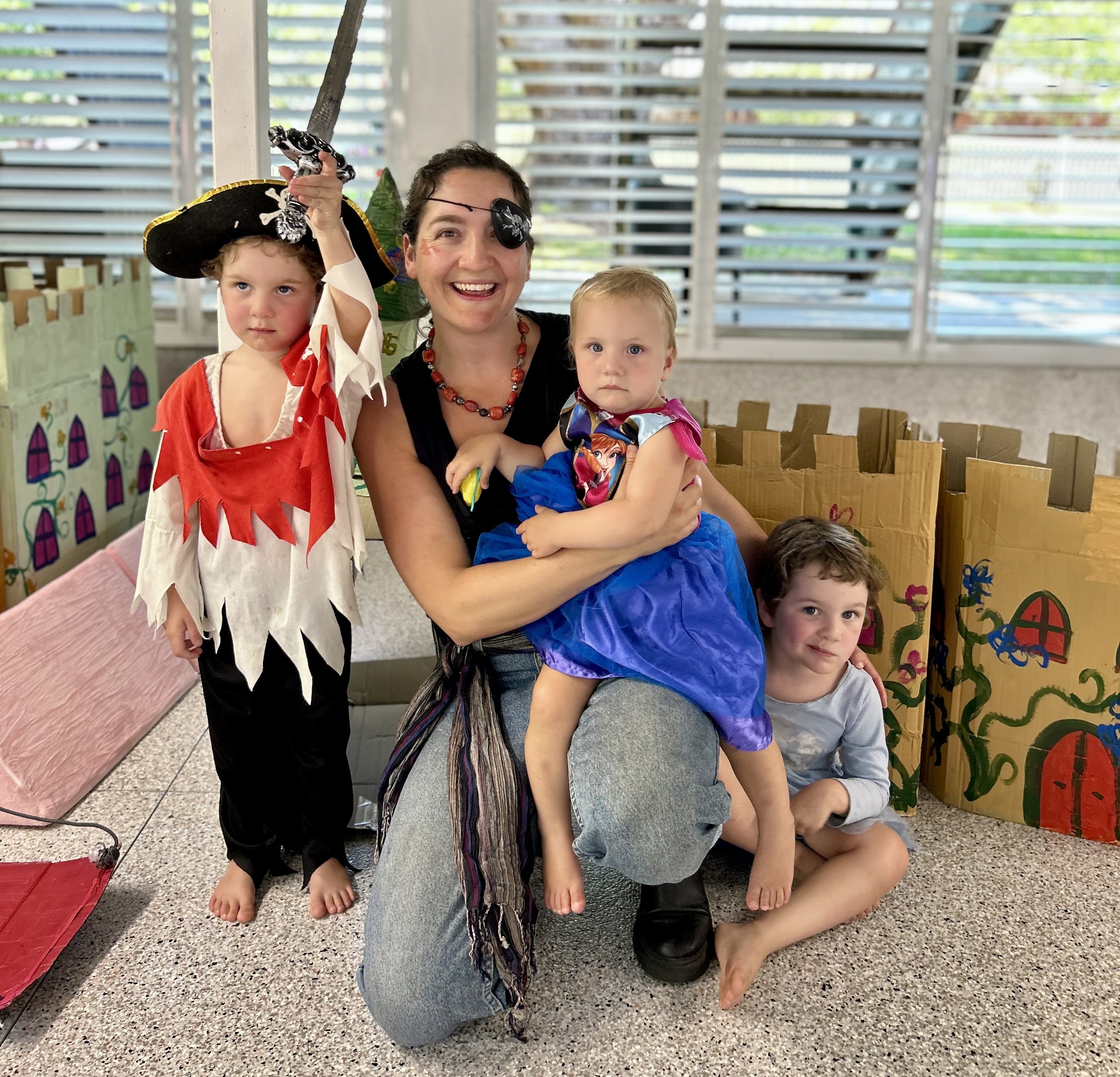
The first 1,000 days from conception to age two, is a uniquely sensitive period when the brain’s foundational architecture is built at extraordinary speed. During these years, babies form over a million new neural connections every second, and those connections are shaped by what children experience and their connections with family and other significant adults in their lives. STEAM play (Science, Technology, Engineering, Arts and Mathematics) isn’t about ‘teaching subjects’ to babies and children in their early years. Exploring STEAM is about joyful, hands‑on exploration with support of family and caregivers that strengthens brain pathways for learning, wellbeing, and resilience.
The Science Behind STEAM in the First 1,000 Days
Brains are built over time, from the bottom up: simple circuits form first, then more complex ones. Early experiences selectively strengthen connections; unused ones are pruned for efficiency. Everyday sensory exploration such as looking, listening, touching and moving, provides the “raw data” the brain uses to wire networks for attention, memory, language, and self‑regulation.
Global public‑health frameworks emphasise that these 1,000 days are a window of opportunity for where nutrition, play, and caring relationships establish help children grow strong, healthy, and ready to learn.
The next 1,000 days, from age two to five, is a key period where early learning and growth is consolidated and the foundations built in early life are strengthened further, to assist with transitions to early education learning environments.
Adult and Baby Interaction: The Heart of Early STEAM Learning
Babies are born ready to connect. When a baby ‘serves’ (gazes, babbles, reaches), a caring adult ‘returns’ (talks back, imitates, names, smiles). These early interactions are the heart and science of early learning, supporting language, social understanding, stress regulation, and the meaning‑making that turns simple play into brain‑building STEAM exploration. Co‑regulation (adults lending their attention) helps babies focus, feel safe, and continue to practice and try again.
Executive Function Starts Here
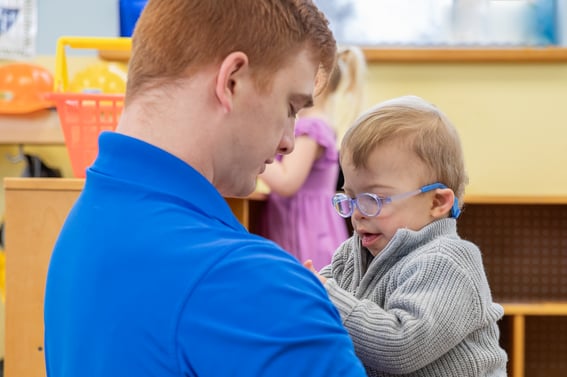
STEAM play from birth to age two lays the foundation for executive function – this is the way the brain organises and distributes information that supports working memory, inhibitory control, and cognitive flexibility. In the earliest years, babies practice these capacities in simple ways: holding a goal in mind (reaching for the rattle), waiting briefly, and shifting attention. Over time, through play, these systems are strengthened when activities are child-led and require planning, focus, switching, and persistence and problem solving.
Everyday, Culturally Responsive STEAM
You don’t need special equipment. Household routines (and often taste-safe items in the pantry) are rich STEAM laboratories:
- Bath time (physics of float/sink, volume, temperature). Try Float or Sink and explore volume, physics and gravity in a fun, child-led way.
- Kitchen time (pouring, mixing, patterns, smells, textures). Try Hidden Colours for a fun, surprise reveal experiment!
- Outdoor walks (observing light/shadow, sound, weather, living things). Try Transient Nature art and collect items of interest as you explore.
When families use their own stories, songs, languages, and materials, play becomes more meaningful and engaging, strengthening identity, relationships, and curiosity.
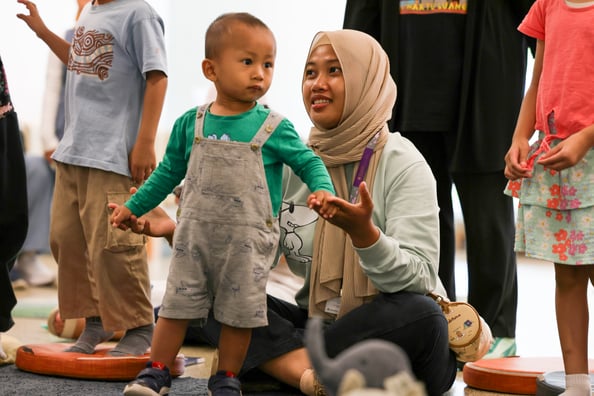
Supporting culturally and linguistically diverse playgroups allow families to explore language, culture and identity and remain connected to cultural heritage during these formative 2,000 days.
STEAM Ideas for Birth to Two Years
There are examples of activities you can explore with your child, they are available via our Play Matters member portal. It’s free to join, simple sign up, sign in and access hundreds of STEAM and exploratory activities that are low-cost and easy to execute and do at home!
0–6 months: Sensory exploration & connection
-
High‑contrast visuals (black/white patterns) to support visual tracking.
-
Sound play (shakers, caregiver’s voice, gentle rhythm). DIY Rattle Activity
-
Tactile variety (soft cloths, cool spoon, textured mats). Sensory Boards
Brain Building Link: rich, multi‑sensory input with serve‑and‑return strengthens early circuits and regulation.
6–12 months: Cause‑and‑effect & early problem‑solving
- Water play with cups/spoons for pouring, noticing flow and volume.
- Stacking/knocking to explore balance, stability, and symmetry. Try Hallway Bowling
- Peekaboo & hide‑and‑find for object permanence and memory. Try Peek-A-Boo Board
Brain Building Link: repeated trials and responsive feedback build pathways for attention and working memory.
12–24 months: Investigation, making, and early symbolic play
- Loose parts (safe recyclables) for filling/emptying, sorting by size/shape. Creating Visual Patterns is a fun way to explore this.
- Simple building (boxes, containers) for structure and spatial thinking. Try this DIY Shape Sorter
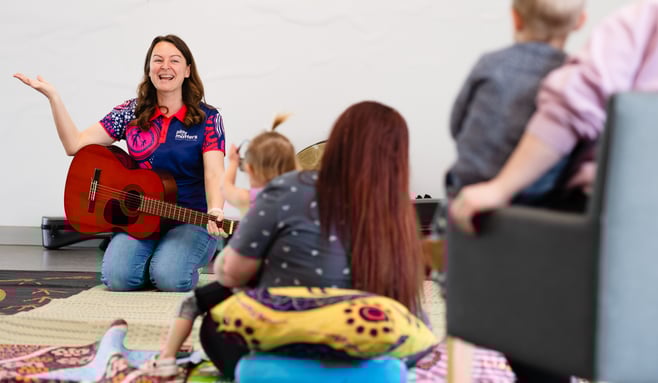
- Music & movement (tap‑pause‑tap) to practise rhythm and inhibitory control (“stop/go”). Sing&Grow have an amazing range of movement, calm and transition songs you can use throughout the day to create praise, routine and consistency. Access on Spotify HERE.
Brain Building Link: playful challenges exercise executive function and flexible thinking.
Technology Use in the First 2,000 Days
Current guidance recommends very limited media use under age two, with exceptions like connecting with loved ones via video chat. If digital media is used with older toddlers, choose high‑quality, age‑appropriate content to view with your child, and keep screens out of the ‘wind down’ and sleep routine time.
Watching together matters: When digital tools are child‑centred and used with a caregiver, they may support learning; when designed to maximise engagement, they risk displacing sleep, movement, and social play. Keep it brief, purposeful, and relationship‑rich.
For more information on screen time guidelines, this tip sheet has some helpful tips. Sheet for Parents - Screen time and children
Why This Matters: The First 2,000 Days
Investing in connection‑rich STEAM play in the first 2,000 days through high‑quality, play‑based environments and caring relationships help children consolidate attention, self‑regulation, language, and numeracy, key foundations for school readiness and long‑term wellbeing.
References & Further Reading
Center on the Developing Child at Harvard University. (n.d.). Brain architecture. https://developingchild.harvard.edu
Center on the Developing Child at Harvard University. (n.d.). Serve and return. https://developingchild.harvard.edu
Center on the Developing Child at Harvard University. (n.d.). Executive function. https://developingchild.harvard.edu
UNICEF. (n.d.). Early moments matter: The first 1,000 days. https://www.unicef.org
The Lancet. (2024). The next 1,000 days: Extending the window of opportunity (ages 2–5). https://www.thelancet.com
National Association for the Education of Young Children. (2024). Executive function through playful learning. https://www.naeyc.org
ZERO TO THREE. (2025). Co‑regulation strategies in the early years. https://www.zerotothree.org
Harvard Health Publishing. (2024). Co‑regulation in early childhood. https://www.health.harvard.edu
Spotify. (n.d.). Sing&Grow Australia: Let’s Sing&Grow Together https://open.spotify.com/artist/0ZWL3lw1F70XTuDwXokjqd
Play Matters Australia. (n.d.). All about the HOW: Process‑focused STEAM through play [Blog post].
Queensland Department of Education. (n.d.). Screen time and children. https://earlychildhood.qld.gov.au/earlyYears/Documents/pts-screen-time-and-children.pdf
Related content:
Advertisement:
.jpg)
Discover the Play Hub!
Access over 100 activities, play resources,
videos and content.