



.jpg)
Messy play gives children opportunities to explore, experiment, problem‑solve and express themselves using their whole bodies (if they wish) and all their senses. Messy Play does not need expensive, elaborate, equipment or extensive planning to have a big impact on early learning and development.
May at Play Matters is Messy Play Month and it’s a great reminder that learning doesn’t always look like the perfect tuff tray set up – it’s in the exploration of different textures and objects where rich learning and development occurs.
Whether you’re playing with a baby on the floor, supporting a toddler’s curiosity, or encouraging imagination in pre‑prep children, these suggested starting points for messy play can be adapted for different ages, abilities and comfort levels – as well as spaces that may be available to you for play.
Why is messy play important for children?
Messy play supports children’s development in a broad variety of ways. Through touching, squeezing, splashing and creating, children build sensory awareness, strengthen fine and gross motor skills, and develop language, social skills and emotional regulation. Just as importantly, messy play values exploration and process and that is completely unique to each child and their interests.
Some children may initially avoid certain textures. Messy play works best when adults move slowly, offer choice, and allow children to engage at their own pace without pressure.
Supporting Children’s Agency Through Messy Play
One of the most valuable aspects of messy play is how it supports agency – a child’s sense that they can make choices, initiate ideas and influence what happens next.
Messy play works best when:
- It is child-led and open-ended
- Allows children to decide how materials are used
- Encourages curiosity, exploration and persistence
- Builds confidence by showing children their ideas matter and their contributions are valuable
Adults play an important role by:
- Following the child’s lead, rather than directing outcomes
- Modelling curiosity instead of instruction (“I wonder what would happen if…”)
- Allowing time for children to think, experiment and respond
- Talking about the experience, not the result
This approach helps children develop independence, problem‑solving skills and a “can‑do” attitude – all essential foundations for learning and wellbeing.
Messy Play for Babies (0–12 months)
For babies, messy play is about safe sensory exploration and building early connections between senses and movement.
Easy ideas to try
- Bath time play: Gentle splashing, floating toys and water pours support sensory learning and early language as adults label actions.
- Mealtime textures: Supervised play with yoghurt, mashed fruit or vegetable purées allows babies to explore touch, smell and taste.
- Outdoor sensory time: Feeling grass, sand or water while sitting or lying outdoors supports body awareness and curiosity.
These experiences help babies become more comfortable with different sensations and build trust in their ability to explore the world.
Messy Play for Toddlers (1–3 years)
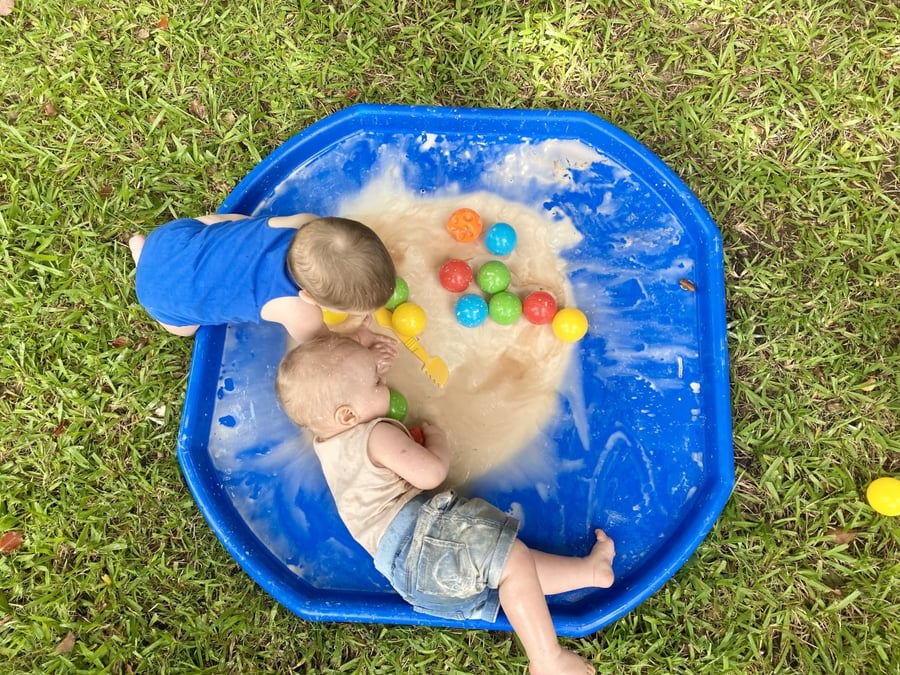
Toddlers are natural experimenters. Messy play supports their growing independence, need for movement and desire to imitate everyday life.
Easy ideas to try
- Water play: Containers, spoons and bottles for filling and pouring help toddlers explore cause and effect.
- Sand or dirt tubs: Digging, hiding and finding objects encourages problem‑solving and fine motor development. There are a range of amazing taste-safe alternatives on the Play Matters Hub if oral-exploration is their thing!
- Household tools: Safe kitchen utensils for scooping, tipping and stirring give toddlers a sense of agency. These tools can be taken into natural spaces for dirt digging, mud pies and messy play in nature.
Toddlers often play alongside others rather than cooperatively, messy play supports early social awareness without pressure to share perfectly, a great learning ground and space for future interactions.
.jpg?width=8256&height=5504&name=50%20Years%20Mons%20-%20Candids%20(11).jpg)
Messy Play for Pre‑Prep Children (3–5 years)
Pre‑prep children thrive on imagination and collaboration. Messy play at this age encourages planning, storytelling and shared problem‑solving.
Easy ideas to try
- Creative painting: Fingers, sponges, leaves or vegetables as tools shift focus away from “perfect pictures”. Find materials in nature and use them in new, creative ways.
- Playdough and clay: Everyday items like pop sticks or garlic presses promote creativity and hand strength. You can integrate natural elements like herbs, leaves, flower petals, sticks and rocks into playdough play.
- Sand and water construction: Building roads, rivers and tunnels encourages teamwork and flexible thinking.
At this stage, children often negotiate roles and ideas together, key social skills that develop naturally through open‑ended play.
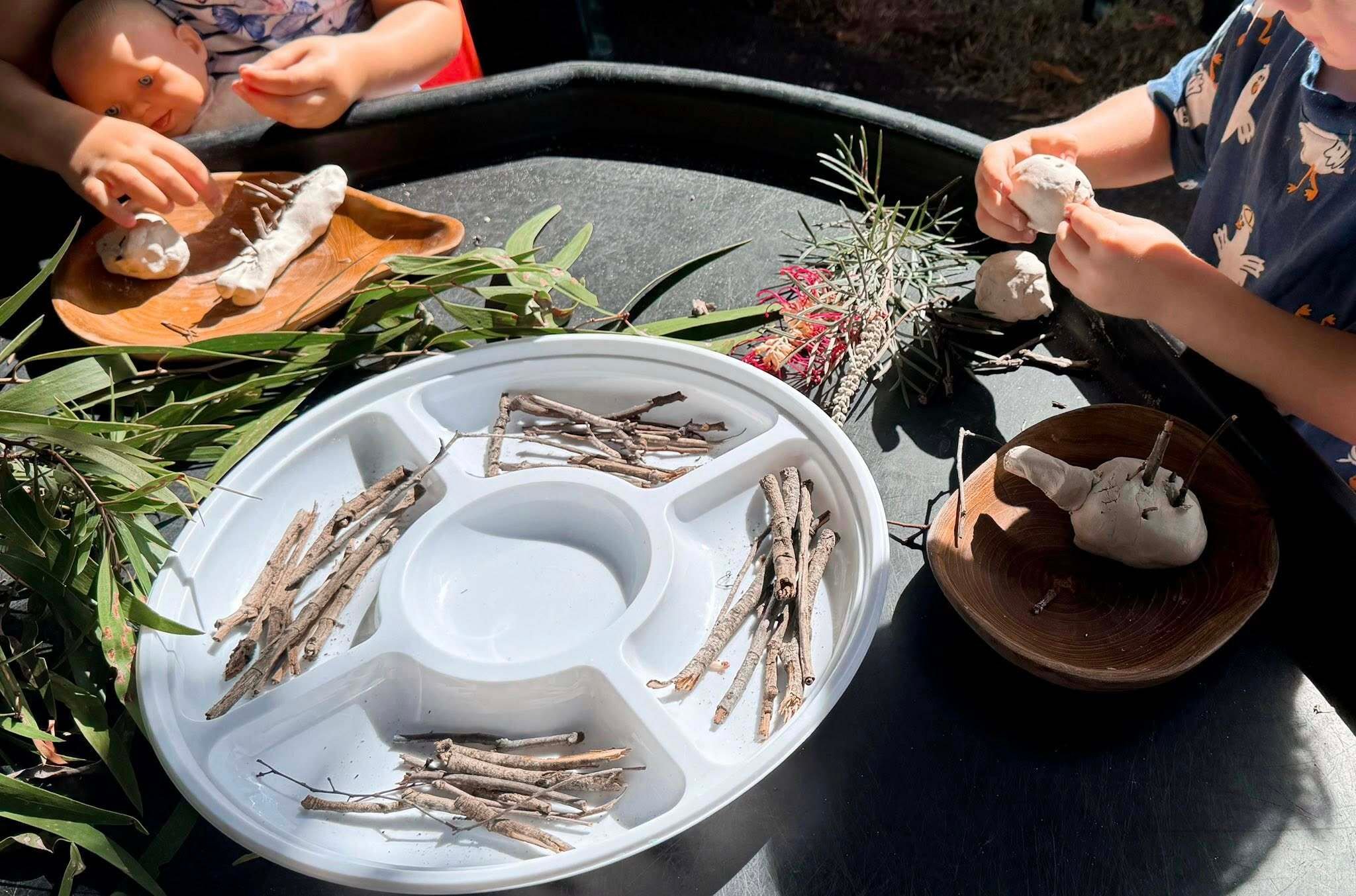
Picture: Courtesy of Samford Playgroup
Nature Play: An Easy Way to Engage in Messy Play
Nature play, especially mud kitchens, are one of the easiest, most accessible ways to explore messy play with children.
The Nature Play WA Mud Kitchen Magic blog highlights that nature‑based messy play:
- Uses open‑ended natural materials (mud, water, leaves, sticks)
- Encourages creativity and imagination without needing instructions
- Supports sensory, physical, social and emotional development
- Happens naturally outdoors, making clean‑up easier and stress lower for adults
Mud play supports fine and gross motor skills through scooping, pouring and mixing; language and social skills through shared pretend play; and emotional regulation through calming, repetitive sensory actions. Playing in nature also strengthens children’s connection to place and supports overall wellbeing.
You don’t need a permanent mud kitchen – a bucket of dirt, some water, old pots and a patch of outdoor space is more than enough. If you can’t be outside, then find a space on a verandah if possible, a container for exploration and a splash mat to catch the drips!
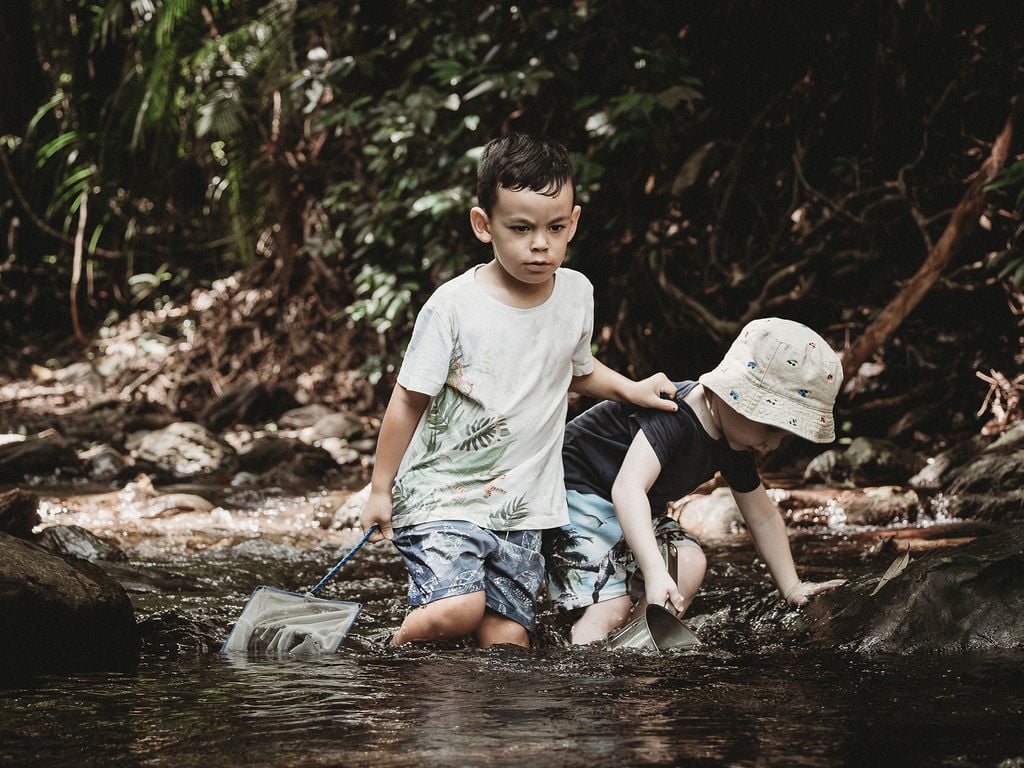
Picture: Courtesy of Rainforest Rugrats in Cairns.
We were lucky enough to host Sarah from Nature Play WA as part of our Lunch&Learn Nature Play Month. You can watch here.
Nature Play WA also have a range of great, free resources available on their website here.
Making Messy Play Easy and Inclusive
Messy play doesn’t need to involve special trips to the shops or elaborate set ups. A few simple strategies can make it enjoyable for everyone:
- Use spaces you are familiar with and comfortable getting messy – outdoors is ideal
- Dress for mess with old clothes or aprons, take a change of clothes with you and a bag to put wet/dirty clothes in
- Start with familiar textures and build gradually
- Set simple boundaries before play begins (you can play with the mud in the container, but if you throw it outside of the container, we will pack it away – this will differ from family to family)
- Invite children to assist with clean up when they are ready
Most importantly, join in. When adults show enjoyment and curiosity, children feel safe to explore, take risks and trust their own ideas.
Celebrating Messy Play Month
You can join in messy play activities and exploration at Play Matters affiliated range of playgroups. Be sure to check their schedule, timetable and planned activities via our postcode finder and find your favourite place to play and connect!
References
Child and Adolescent Health Service. (n.d.). Play and learning – Messy play. Government of Western Australia. https://www.healthywa.wa.gov.au
Nature Play WA. (n.d.). Mud kitchen magic: Pop‑up messy play space. https://www.natureplaywa.org.au
Play Matters Australia. (n.d.). Messy May / Active inclusion play kit. https://www.playmatters.org.au
The OT Store. (n.d.). Embrace messy play. https://www.theotstore.com.au
Related content:
.jpg?width=352&name=PLAY%20MATTERS%20(57).jpg)


Advertisement:
.jpg)
Discover the Play Hub!
Access over 100 activities, play resources,
videos and content.